When it comes to launching a new startup in 2025, your website isn’t just a digital identity—it’s your growth engine. A well-designed startup website can attract customers, strengthen your brand story, and drive conversions. But with user expectations changing fast, smart UX design for startups is no longer optional—it’s the foundation for sustainable success.
In this guide, we’ll explore actionable startup website design techniques that can transform casual visitors into loyal customers, using real UX principles that modern startups are applying today.
Why UX Design Matters for Startups in 2025
A startup’s website is often the first interaction with its audience. Modern users are impatient, tech-savvy, and expect seamless digital experiences. If your website doesn’t instantly deliver value, visitors will bounce within seconds.
That’s why UX design for startups—focusing on user satisfaction and intuitive navigation—is vital. A well-structured, fast, and emotionally engaging site builds trust and drives conversions faster than aggressive advertising campaigns.
Key impact areas of UX design:
-
Enhances credibility and trust.
-
Increases time-on-page and customer retention.
-
Optimizes the conversion funnel.
-
Strengthens brand recognition.
-
Supports accessibility and inclusivity.
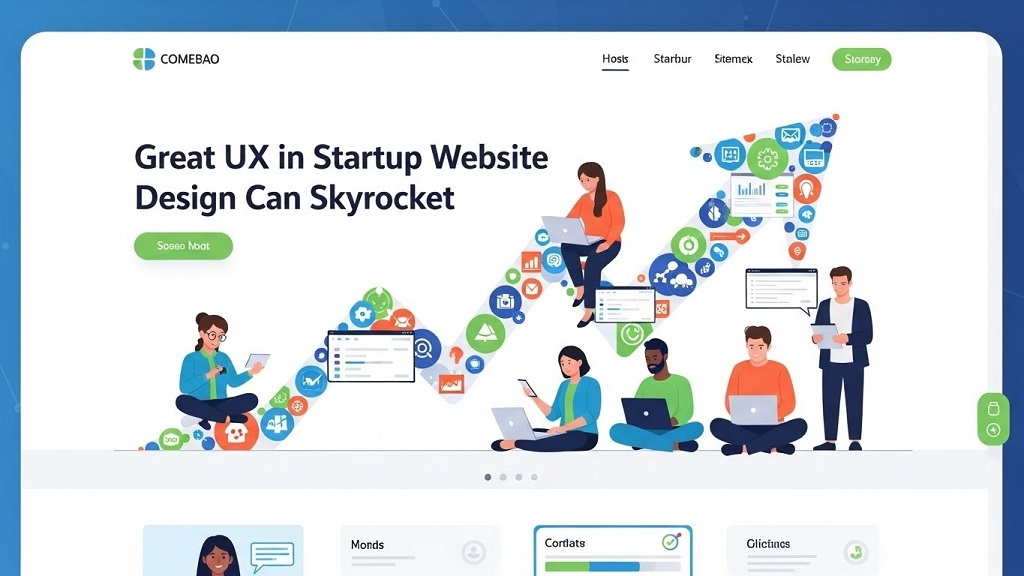
1. Build a Modern Startup Website That Reflects Brand Personality
Keep It Simple and Authentic
Your startup website should tell your brand’s story clearly. Avoid clutter—minimalist, purpose-driven designs outperform overloaded pages. Every visual and interactive element should serve a measurable goal: informing, guiding, or converting.
Use Consistent Visual Branding
Choose a color palette, typography, and imagery that align with your brand’s mission. This consistency reinforces recognition and emotional connection. For instance, fintech startups often use trust-associated colors like blue, while sustainable brands prefer earthy tones and organic visuals.
Optimize for Mobile First
In 2025, most users will visit your site via mobile. Adopt mobile-first design principles—optimize menus, touch-friendly buttons, and ensure fast loading. Google’s mobile usability is now a key ranking factor, and responsive web design directly enhances UX.
2. Focus on Fast Page Loading and Core Web Vitals
Website loading speed is directly linked to conversions. According to Google research, a delay of just one second can reduce conversions by 20%.
Key UX speed boosters:
-
Use lightweight, responsive templates.
-
Compress images without losing quality.
-
Implement lazy loading for visuals and media.
-
Use a reliable Content Delivery Network (CDN).
-
Leverage browser caching for repeat visitors.
Improving these areas not only helps your modern startup website rank better but also provides a fluid browsing experience across devices.
3. Craft Intuitive Navigation and Structure
Users should find what they’re looking for within three clicks. Clear menu hierarchies, sticky navigation bars, and logical page flow ensure visitors don’t get lost.
Best practices for startup site navigation:
-
Design with user intent in mind.
-
Use clear labels for menu items.
-
Position CTAs (Call to Actions) strategically.
-
Include search functionality for content-heavy sites.
An intuitive UX design for startups removes friction points and helps visitors complete their goals—whether that’s signing up, purchasing, or booking a demo.
4. Design Engaging and Conversion-Driven Landing Pages
Landing pages are the heartbeat of your startup’s online growth. They should convert interest into measurable action.
Key conversion design tips:
-
Start with a powerful headline that resonates.
-
Add trust signals (testimonials, ratings, logos).
-
Use a dominant call-to-action button with contrast.
-
Keep form fields minimal—collect only essential info.
-
Use visual storytelling to highlight value propositions.
A data-backed startup website design ensures that each page plays a specific role in the buyer’s journey while maintaining emotional and visual consistency.
5. Prioritize Accessibility and Inclusivity
Accessibility isn’t just about legal compliance; it’s about user respect. In 2025, inclusive design will be a standard expectation.
Ways to enhance accessibility:
-
Use readable font sizes and high color contrast.
-
Ensure keyboard navigation for all elements.
-
Add alt text for all images.
-
Implement ARIA landmarks for screen readers.
When a modern startup website embraces inclusivity, it not only broadens its audience reach but also demonstrates ethical responsibility—an essential value for emerging brands.
6. Integrate Smart UX Copywriting
The copy on your site is as crucial as the visuals. Use UX writing principles to guide users with clarity and empathy.
Examples:
-
Replace “Submit” with “Get My Free Guide.”
-
Use microcopy to clarify errors or next steps.
-
Keep headlines action-focused and benefit-driven.
Good UX copy communicates purpose instantly, setting expectations and reducing friction.
7. Use Psychological Triggers to Boost Conversions
Smart UX isn’t only about graphics—it’s grounded in psychology. Understanding what motivates users enables startups to design experiences that encourage action.
Proven UX triggers:
-
Social proof: Showcase reviews, social mentions, or testimonials.
-
Scarcity: Highlight limited-time offers or early-bird discounts.
-
Authority: Display partnerships, certifications, or media features.
-
Reciprocity: Offer free trials, eBooks, or resources before asking for signups.
These elements nudge visitors organically, making your startup website design powerful and persuasive.
8. Implement Data-Driven UX Testing
What works for one startup may not work for another. Continuous testing allows you to enhance performance through real user data.
Testing tools and techniques:
-
A/B test different CTAs and layouts.
-
Use heatmaps to track clicks and scroll depth.
-
Conduct user feedback surveys.
-
Monitor bounce rate and dwell time via analytics.
This iterative approach ensures your UX design for startups evolves alongside user behavior and market dynamics.
9. Incorporate AI and Personalization Features
With rising AI-driven design trends in 2025, personalization is expected. Use automation to deliver tailored experiences.
Personalization strategies:
-
AI chatbots for instant support.
-
Dynamic content based on browsing behavior.
-
Personalized email pop-ups or recommendations.
Modern startups leveraging AI in UX design achieve higher engagement and retention—two pillars of digital growth.
10. Build Trust Through Transparent Design
Transparency increases conversions. Show users who you are, what you offer, and why they can trust you.
Trust-building design elements:
-
Visible contact info and brand story.
-
Secure payment badges and SSL certificates.
-
Authentic imagery (avoid overused stock photos).
-
Upfront pricing and privacy policies.
Clarity builds credibility, an essential asset in early-stage brand growth.
Final Thoughts: Your UX Is Your Growth Engine
A high-performing startup website design doesn’t just look good—it feels right. As digital competition intensifies in 2025, the startups that stand out will be those embracing modern UX principles, optimizing for user experience first and algorithms second.
Investing in UX is investing in conversion growth, brand loyalty, and long-term customer satisfaction. Your website is often your most valuable employee—make sure it’s ready for the future.
Call to Action (CTA)
Want to transform your startup’s website into a conversion powerhouse? Reach out to our design experts and get a custom UX audit for your startup website today—start turning visitors into lifelong customers.
FAQs on Startup Website Design in 2025
1. What makes a startup website successful in 2025?
Success depends on a fast, user-centered, and mobile-optimized website that clearly communicates a startup’s mission while offering smooth navigation and a clear conversion funnel.
2. How does UX design impact conversions?
Good UX removes barriers and makes interactions enjoyable, increasing the likelihood that users will complete actions like signing up, purchasing, or requesting a demo.
3. What’s the ideal homepage design for a modern startup website?
Keep it visual, minimal, and focused on a single clear message. Include trust elements, concise CTAs, and an easy path to learn more about your offerings.
4. Should startups invest in professional UX audits?
Absolutely. UX audits reveal friction points, identify usability issues, and provide data-driven insights that can greatly improve your website’s performance and conversion rate.
5. How often should startups update their website design?
At least once every 12-18 months, or whenever your startup pivots, introduces a new product, or experiences a drop in engagement metrics.
Related Topics: Master Clickable Checkboxes in Word: From Developer Tab to Interactive Forms
Related Topics: Diaphragm Carburetor Repair: Step‑by‑Step DIY Guide for Chainsaws, Trimmers, and Blowers