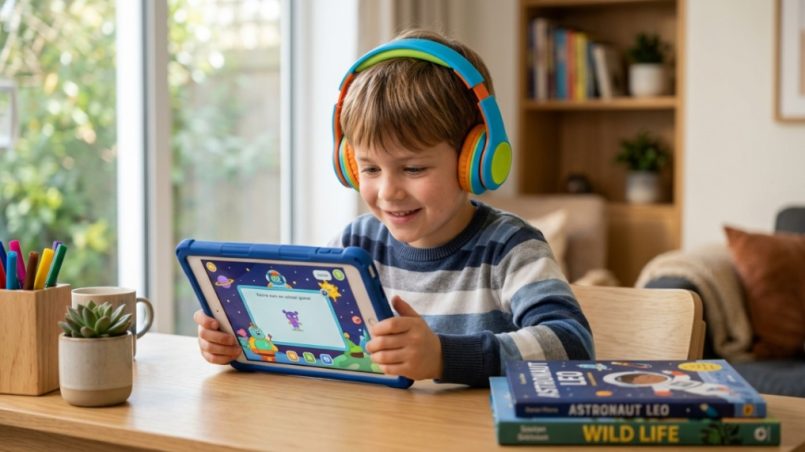
The problem is real: Your child sits down to do homework, and within two minutes, they’re distracted. The dog barks, a sibling slams a door, the neighbor’s lawnmower starts up, and suddenly that math worksheet might as well not exist. Focus evaporates before it ever forms.
It’s not that kids are lazy or unmotivated. Their brains are still developing the ability to filter out irrelevant stimuli. Research shows that children are 30-40% more susceptible to environmental noise disruption than adults. In busy households, this means homework time often turns into a battle of wills, tears, and frustration for everyone involved.
Here’s the good news: You don’t need a soundproof room or a library-level quiet house. A pair of quality study headphones for children, combined with a few simple space-design strategies, can transform any corner of your home into a focused learning zone. Let’s build that space together.
Why Do Children Struggle to Focus in Noisy Home Environments?
Children’s prefrontal cortex — the brain region responsible for attention control and filtering distractions — doesn’t fully mature until their mid-20s. For kids aged 5-12, this means they literally lack the neural wiring to ignore background noise the way adults can.
Studies from the Journal of Cognitive Enhancement show that even moderate background noise (50-60 dB, equivalent to normal conversation) reduces reading comprehension by 15-25% in children under 10. For tasks requiring sustained concentration — math problems, writing assignments, online learning — the impact is even greater.
Common home noise culprits include: TV in another room (60 dB), sibling play (70-80 dB), kitchen appliances (65-75 dB), outside traffic (70 dB), and multi-person conversations (65 dB). Together, these create a constantly shifting soundscape that forces a child’s brain to repeatedly re-focus — exhausting their limited attention resources quickly.
How Do Study Headphones for Children Actually Improve Focus?
Study headphones for children work on two levels: physical noise reduction and psychological signal.
Physical Noise Reduction: Whether through passive isolation (sealed ear cups) or active noise cancellation, headphones reduce environmental noise by 15-35 dB. This brings a typical noisy household down to library-level quiet — the sweet spot for concentration.
Psychological Signal: Putting on headphones becomes a ritual. It tells the brain “focus time is starting now.” Over time, this creates a powerful association — headphones on equals study mode. Child psychologists call this a “transition cue,” and it’s remarkably effective for kids who struggle with the shift from play to work.
Additionally, many study headphones can play white noise, brown noise, or focus music at low volumes — scientifically shown to improve sustained attention by providing a consistent, non-distracting auditory background that masks intermittent household sounds.
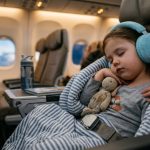
Creating a quiet environment at home is essential for concentration, but maintaining that same level of peace doesn’t have to stop at the front door. Whether your child is studying at their desk or sitting on a crowded airplane, the right gear makes all the difference. If you are planning a family trip soon, learning how to keep kids comfortable during long flights with the right headphones will ensure their entertainment stays quiet and their ears stay protected from engine noise, seamlessly extending their peaceful study habits to the sky.
What Makes the Best Classroom Headphones for Kids at Home?
The criteria for study headphones differ from entertainment or travel headphones. Here’s what matters most for learning environments:
- Comfort for Extended Sessions: Homework sessions can run 30-90 minutes. Lightweight design (under 180g), breathable ear pad materials, and minimal clamping pressure prevent headache and ear fatigue.
- Volume Limiting: Essential. 85 dB cap ensures safe listening even during long study sessions. Some models offer adjustable limits (75/85/94 dB) for different ages.
- Microphone for Online Learning: With virtual classrooms still common, a decent built-in mic allows kids to participate in classes without switching gear.
- Wired Option: For school Chromebooks and tablets that may not support Bluetooth, a wired connection ensures universal compatibility.
- Durability: Study headphones get daily use — they need to survive being tossed in backpacks, dropped on desks, and occasionally stepped on.
- Simple Controls: Kids shouldn’t need to fiddle with apps or complex buttons. On/off, volume up/down — that’s it.
How Should You Set Up a Quiet Learning Space at Home?
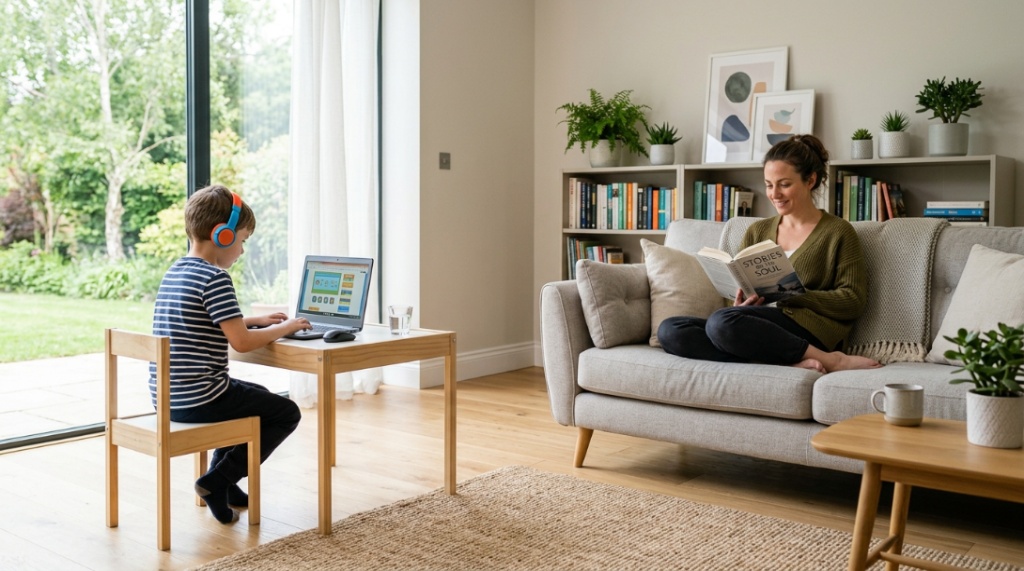
Headphones are one piece of the puzzle. The physical space matters too. Here’s a step-by-step approach that works for any home, any budget:
Step 1: Choose the Right Location
Pick the quietest corner available — away from the kitchen, TV room, and main traffic paths. Near a window for natural light is ideal. If you don’t have a separate room, even a corner of a bedroom works when properly set up.
Step 2: Minimize Visual Distractions
Face the desk toward a wall or use a simple desk divider/partition. Remove toys and non-study items from the immediate area. A clean, minimal visual field signals “work zone” to the brain.
Step 3: Add Soft Surfaces for Sound Absorption
Hard surfaces reflect sound; soft surfaces absorb it. Add a rug under the desk, a fabric bulletin board on the wall, or even a bookshelf filled with books — all act as natural sound dampeners that reduce echo and ambient noise.
Step 4: Introduce the Headphones as a Focus Tool
Present the headphones as a special “study superpower” — not a punishment. Let your child choose their preferred background sound (silence, white noise, instrumental music, or nature sounds). This gives them ownership and makes them more likely to use the headphones willingly.
Step 5: Establish the Routine
Same time, same place, same headphones. Consistency builds the neural association between headphones and focus. Within 2-3 weeks, most kids automatically shift into study mode when they put their headphones on.
Which Study Headphones for Children Offer the Best Value?
Here’s a comparison of popular classroom headphones for kids that work equally well at home:
| Model | Type | Volume Limit | Microphone | Comfort Rating | Price Range |
|---|---|---|---|---|---|
| Puro BT2200 | Over-ear, Wireless + Wired | 85 dB | Yes (built-in) | ★★★★★ | $70-90 |
| JLab JBuddies Studio | Over-ear, Wireless + Wired | 85 dB | Yes (built-in) | ★★★★☆ | $25-35 |
| LilGadgets Connect+ Pro | On-ear, Wired | 93 dB | No | ★★★★☆ | $25-30 |
| BuddyPhones School+ | Over-ear, Wired | 75/85/94 dB modes | Yes (boom mic) | ★★★★★ | $35-50 |
| iClever HS19 | Over-ear, Wired | 85/94 dB modes | Yes (built-in) | ★★★★☆ | $15-22 |
For pure study use at home, the BuddyPhones School+ offers the best combination: excellent comfort for long sessions, a boom microphone perfect for online classes, and adjustable volume limits that grow with your child. At under $50, it’s purpose-built for learning.
On a tight budget, the iClever HS19 at under $22 is genuinely impressive — comfortable, volume-limited, and durable enough for daily homework use.
What Background Sounds Work Best for Kids’ Study Sessions?
Once your child has their headphones on, what should they actually hear? Research points to several options:
White/Brown/Pink Noise: These consistent, non-patterned sounds mask household disruptions without grabbing attention. Brown noise (deeper, richer) tends to be preferred by kids over harsh white noise. Free apps and YouTube channels offer hours of these.
Instrumental/Lo-fi Music: Music without lyrics at a moderate tempo (60-80 BPM) can improve focus for some children. The key: no words. Lyrics activate language processing areas and compete with reading/writing tasks.
Nature Sounds: Rain, streams, forest ambiance — these provide gentle masking while promoting relaxation. Particularly effective for anxious kids who tense up during homework.
Complete Silence: Some kids focus best with just the noise reduction alone — no additional sound. Let your child experiment and choose what works for them. There’s no universal “best” option.
How Can Headphones Help Kids with ADHD or Sensory Processing Differences?
For neurodiverse children, the benefits of study headphones extend beyond simple noise reduction. Kids with ADHD often experience “sensory flooding” — their brains struggle to prioritize relevant input over irrelevant noise. Headphones act as an external filter, doing the job their neurology finds difficult.
Occupational therapists frequently recommend noise-reducing headphones as part of sensory diets for children with SPD (Sensory Processing Disorder), autism spectrum conditions, and ADHD. The headphones provide a controlled auditory environment that reduces overwhelm and allows the child to allocate more cognitive resources to the task at hand.
For these children, having a dedicated pair of noise cancelling headphones designed specifically for kids can be genuinely life-changing — transforming homework time from a daily meltdown trigger into a manageable, even enjoyable, routine.
What Mistakes Do Parents Make When Setting Up Study Spaces?
Avoid these common pitfalls:
- Forcing headphones on reluctant kids: This backfires. Introduce them as a choice, not a requirement. Let kids experience the benefit and choose to use them.
- Choosing uncomfortable headphones: If they hurt after 10 minutes, kids won’t wear them. Prioritize comfort over features every time.
- Playing distracting content: Study headphones should play focus-enhancing audio or nothing — never YouTube videos, podcasts with talking, or lyrical music during homework.
- Expecting instant results: The headphones-as-focus-signal habit takes 2-4 weeks to build. Be patient and consistent.
- Ignoring breaks: Even with perfect focus tools, kids need movement breaks every 25-30 minutes. Use the Pomodoro technique — 25 minutes focused, 5 minutes break, headphones off.
- One-size-fits-all approach: What works for one child may not work for another, even siblings. Let each child customize their setup.
How Do Schools Use Classroom Headphones — and How Can You Replicate That at Home?
Many schools now provide classroom headphones for kids during independent work time, testing, and computer-based learning. The approach is simple: when headphones go on, it’s individual focus time. No talking, no group interaction — just the student and their task.
You can replicate this at home by:
- Using the same style headphones at home as school uses (ask the teacher what model)
- Matching school timing — if school uses 30-minute focus blocks, do the same at home
- Creating a visual signal (a “studying” door sign or desk lamp color) that tells family members not to interrupt
- Having a dedicated headphone hook or stand at the study desk — visible and always ready
Consistency between school and home environments reinforces the focus association and makes transitions smoother for children.
FAQ
How long should kids wear study headphones during homework?
Follow the 25-5 rule: 25 minutes of focused headphone use, then 5 minutes break with headphones off. For younger children (5-7), shorten to 15-20 minute blocks. This prevents ear fatigue and maintains the psychological “specialness” of headphone time.
Are noise cancelling headphones better than regular headphones for studying?
For noisy households, yes. ANC provides 20-35 dB of additional noise reduction that passive headphones can’t match. However, in already-quiet environments, even basic over-ear headphones with good passive isolation provide sufficient focus benefits through the psychological ritual alone.
Can kids use earbuds instead of over-ear headphones for studying?
Over-ear headphones are recommended for children under 12 for several reasons: better comfort during extended wear, safer volume distribution, easier parental monitoring (you can hear if they’re blasting music), and they don’t push into the ear canal which can cause irritation with daily use.
What volume should study headphones be set at for children?
For background focus sounds (white noise, instrumental music), 50-60 dB is ideal — roughly the volume of quiet conversation. This provides enough audio to mask distractions without being loud enough to cause fatigue or hearing concern over time.
Do headphones actually improve grades and academic performance?
Studies show improved task completion rates (20-30% faster) and comprehension scores (10-15% improvement) when children study in noise-reduced environments. While headphones alone won’t fix underlying academic challenges, they remove one significant barrier to focus and information retention.
Should parents let kids use headphones during all homework or just some subjects?
Let kids decide. Some subjects (reading, math) benefit more from quiet focus. Others (art projects, creative writing) might flow better with ambient sound or even no headphones. Giving children this choice builds self-awareness about their own focus needs — a valuable lifelong skill.
How do I know if headphones are actually helping my child focus?
Track three metrics over 2-3 weeks: time to complete homework (should decrease), number of “I’m stuck” interruptions (should decrease), and quality of completed work (should improve or stay constant). If all three trend positively, the headphones are working.
Key Takeaways
- ✅ Children are 30-40% more susceptible to noise distraction than adults — it’s neurology, not laziness
- ✅ Study headphones for children work both physically (noise reduction) and psychologically (focus ritual cue)
- ✅ The ideal study space combines headphones + minimal visual distractions + consistent routine
- ✅ Budget options ($15-35) work effectively for daily homework use — premium ANC isn’t always needed for home study
- ✅ Give kids choice in sound preferences and don’t force headphone use—ownership drives compliance