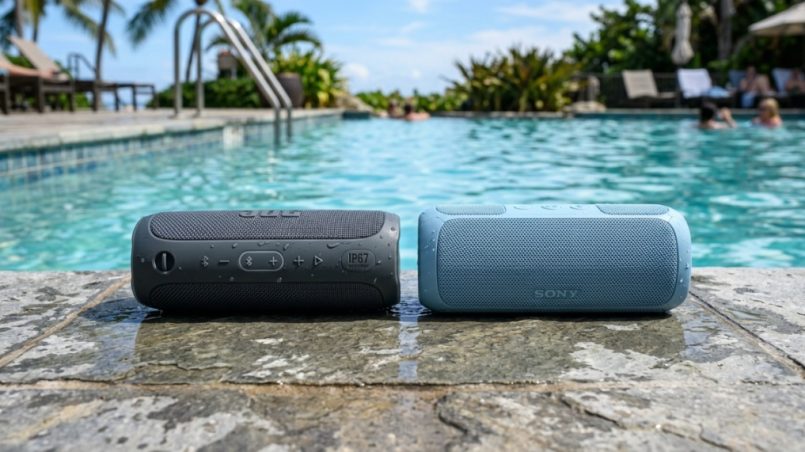
You just bought a new waterproof Bluetooth speaker, cranked it up by the pool, and… it sounded like a tin can. You’re not alone. The biggest frustration shoppers face isn’t finding a speaker that works in the rain—it’s figuring out which one actually sounds good while doing so. Most comparisons focus on IP ratings and battery life, leaving sound quality as an afterthought. That’s a mistake. To truly compare waterproof Bluetooth speaker sound, you need to look past the marketing hype and focus on specific audio metrics, real-world listening conditions, and your personal usage scenario. This guide will walk you through exactly how to evaluate sound like an expert, so you never waste money on a speaker that’s all splash and no substance.
What Factors Actually Determine Sound Quality in a Waterproof Speaker?
Sound quality in a waterproof speaker is determined by driver size, frequency response, output power (watts), and the enclosure’s acoustic design. Waterproofing often muffles sound, so manufacturers must compensate with better components and tuning.
Driver Size and Configuration
Larger drivers—typically 40mm to 60mm—move more air, producing deeper bass and louder volume. However, a single driver cannot cover the full frequency range well. Look for speakers with a dedicated tweeter for highs and a passive radiator for bass. Many budget speakers omit the passive radiator, resulting in flat, lifeless sound. For example, a speaker with a 50mm full-range driver and a passive radiator will almost always outperform a 60mm single-driver unit in bass depth.
Frequency Response Range
Frequency response is measured in Hertz (Hz) to kilohertz (kHz). A wider range, such as 60 Hz – 20 kHz, indicates the speaker can reproduce deeper bass and clearer highs. The human ear hears roughly 20 Hz to 20 kHz. Ignore marketing numbers below 60 Hz for portable speakers—they rarely deliver true sub-bass. Instead, focus on the mid-range (300 Hz – 3 kHz) where vocals and instruments live. A speaker with a flat response in this region will sound natural, not muddy or shrill.
Output Power and Sensitivity
Output power, measured in watts (RMS), tells you how loud the speaker can go without distortion. A 20W RMS speaker is sufficient for a small room, while 40W+ is better for outdoor parties. Sensitivity, measured in decibels (dB), indicates how efficiently the speaker converts power into volume. A speaker with 85 dB sensitivity at 1 watt will sound quieter than one with 90 dB sensitivity at the same power. Always compare RMS watts, not peak watts, which are misleading.
How Does Waterproofing Affect Sound Performance?
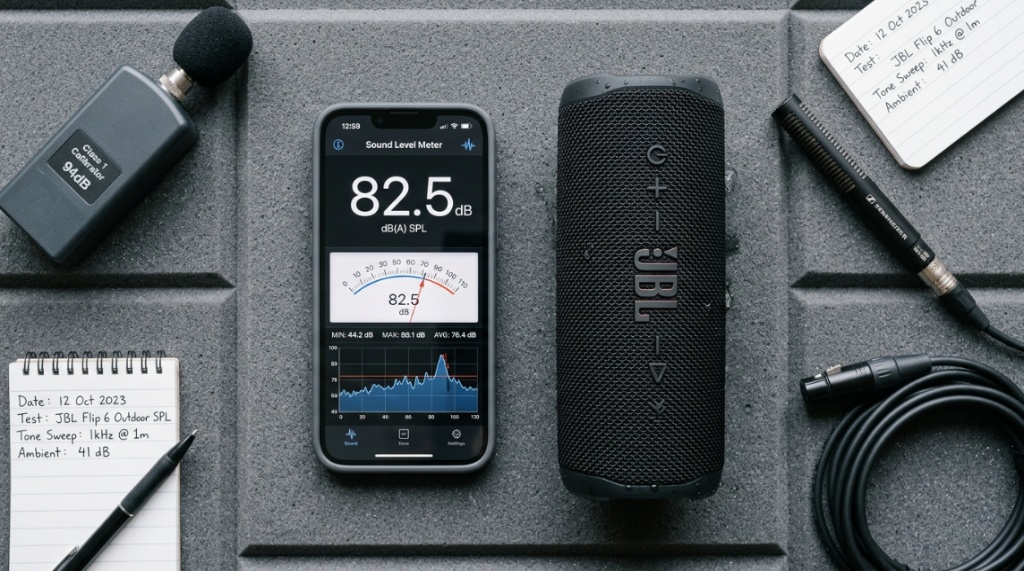
Waterproofing degrades sound quality because the rubber gaskets, sealed ports, and heavy enclosures dampen vibration and reduce airflow. This often results in muffled highs and compressed dynamics.
The Trade-Off Between IP Rating and Audio Fidelity
Speakers with IP67 or IP68 ratings are fully dust-tight and can be submerged in water. To achieve this, manufacturers seal every opening, including the passive radiator and driver cone. This sealing reduces the speaker’s ability to vibrate freely, which can soften bass response and roll off high frequencies. In contrast, a speaker with IPX4 (splash-proof) may sound more open because it has fewer physical barriers. If you prioritize sound quality over underwater use, choose IPX4 or IPX5 ratings over IP68.
Passive Radiator Design in Waterproof Enclosures
Passive radiators are crucial for bass in small, sealed speakers. However, a waterproof housing often forces the radiator to be smaller or made of stiffer material, limiting its excursion. Look for speakers with external passive radiators that are visibly rubberized and can move freely. The JBL Flip series, for example, uses dual external passive radiators that are only partially sealed, allowing better bass than fully internal designs,
Beyond hardware specifications, it is fascinating to see how audio technology has evolved. To understand the broader context, read more about How Has Bluetooth Impacted Society Today.”
Port Placement and Acoustic Shortcuts
Waterproof speakers often eliminate bass ports, which are holes that allow air to move in and out. Without a port, the speaker relies entirely on the driver and radiator, which can lead to “boxy” sound. Some high-end models use proprietary waveguide technology to project sound outward without ports. When testing, place the speaker in an open area—bass ports or radiators are often on the sides or back, and blocking them against a wall will kill the low end.
Which Audio Metrics Should You Prioritize When Comparing Models?
When comparing, prioritize RMS wattage, frequency response flatness, total harmonic distortion (THD), and sound pressure level (SPL) at 1 meter. These numbers tell you how loud, clear, and distortion-free the speaker will be.
RMS Wattage vs. Peak Wattage
RMS (Root Mean Square) is the continuous power the speaker can handle. Peak wattage is a brief burst that quickly distorts. Always compare RMS. A 30W RMS speaker will maintain clarity at 70% volume, while a 50W peak speaker may distort at 50% volume. For outdoor use, aim for 20W RMS minimum; for large gatherings, 40W RMS or higher is better.
Total Harmonic Distortion (THD)
THD measures distortion as a percentage. Below 1% THD is excellent, 1-3% is good, and above 5% is noticeable and unpleasant. Waterproof speakers often have higher THD due to sealed enclosures. Check specs or reviews that measure THD at 80% volume. If a speaker claims 10% THD, avoid it—it will sound harsh and fatiguing.
Sound Pressure Level (SPL) at 1 Meter
SPL tells you how loud the speaker is at a standard distance. A reading of 85 dB is moderate, 90 dB is loud, and 95 dB is very loud for a portable speaker. Remember that decibels are logarithmic—a 3 dB increase requires double the power. Two speakers with the same RMS wattage can have different SPL due to driver efficiency. When comparing, look for SPL ratings above 88 dB at 1 meter.
How to Test and Listen for Sound Quality Before Buying?
You cannot truly evaluate sound by reading specs alone. You need to listen with your ears, using specific test tracks and real-world scenarios that reveal distortion, clarity, and bass response.
Use Reference Tracks for Critical Listening
Use songs you know intimately. Play tracks with deep bass (e.g., “Limit to Your Love” by James Blake), complex mids (e.g., acoustic guitar or piano), and clear highs (e.g., cymbals or female vocals). Listen for distortion at high volumes, especially in the bass. A good speaker should maintain clarity even when you push it to 80% volume. If the bass sounds like a rattle, the driver is overworking.
Test in Outdoor Open Spaces
Waterproof speakers are often used outdoors, where walls and corners don’t reinforce bass. Test the speaker in an open backyard or park, not in a small room. Place it on a flat surface and walk 10-15 feet away. Does the sound remain full? Do vocals disappear? A speaker that sounds great indoors may sound thin outside. Focus on mid-range presence and overall volume fill.
Compare Side-by-Side at Multiple Volume Levels
Always compare at least two models side by side at the same volume levels. Start at 30% for clarity, then 60% for loudness, then 80% for distortion. Many speakers sound acceptable at low volume but fall apart when pushed. The winner is the model that maintains composure at 80% volume without harshness. Record notes on bass depth, vocal clarity, and treble harshness.
Can small-budget waterproof speakers deliver good bass?
Yes, small budget waterproof speakers can deliver surprisingly good bass—if they use a passive radiator and proper tuning. Size constraints limit bass extension, but good engineering can produce punchy, satisfying low end for casual listening.
Best Small Speaker Designs for Bass
Look for mini-cylindrical speakers with a passive radiator on each end, such as the Anker Soundcore 3 or Tribit Stormbox Micro 2. These designs use the entire internal air volume to move the radiators. Avoid tiny rectangular speakers with no visible radiators—they will lack bass entirely. The Trade-Off: Small speakers cannot produce sub-bass (below 60 Hz). They excel at mid-bass (60-120 Hz), which gives music punch and rhythm.
Limitations of Ultra-Portable Speakers
Speakers under 200g (7 oz) physically cannot move enough air to produce deep bass. Physics is the limit. If deep, room-filling bass is your priority, move up to speakers weighing 500g or more. A speaker like the JBL Clip 4 is great for hiking but will always sound thin compared to a JBL Flip 6. Manage your expectations based on size.
Software EQ Settings to Improve Perceived Bass
Many budget speakers include companion apps with equalizers. Boosting the 80-100 Hz range by 3-5 dB can make bass more prominent without causing distortion. However, excessive EQ boost (over 5 dB) will cause the driver to clip at higher volumes. Use EQ judiciously. The best approach is to choose a speaker that already has balanced bass, not one that requires heavy EQ correction.
How Does Stereo Separation Work in Portable Waterproof Speakers?
Most portable waterproof speakers are mono because they house a single driver array. True stereo separation requires two physically separate speaker channels, which is rare in small enclosures.
Single-Driver vs. Dual-Driver Stereo
A single-driver speaker can simulate stereo using digital signal processing (DSP), but it is not true stereo. Dual-driver speakers, such as the Bose SoundLink Flex or Ultimate Ears Megaboom 3, use two separate drivers aimed in different directions to create a wider soundstage. For true left-right separation, you need two physical speakers paired in stereo mode. Many modern speakers allow this via Bluetooth pairing.
Pairing Two Speakers for True Stereo Sound
If you want real stereo, buy two identical speakers that support pairing (e.g., JBL PartyBoost, Ultimate Ears Party Up). Place them 3-6 feet apart at ear level. This creates a genuine stereo image, with instruments and vocals appearing across a soundstage. This is the only way to achieve immersive audio with portable waterproof speakers. Budget for two units, not one.
Why Is Codec Support Important for Sound Quality?
Bluetooth codecs determine how audio data is compressed and transmitted. Better codecs preserve more detail, resulting in clearer sound, especially in the high frequencies.
AAC vs. SBC vs. LDAC vs. aptX
Most waterproof speakers support SBC (standard) and AAC (better for Apple devices). For Android users, aptX and LDAC offer higher bitrates. LDAC can transmit up to 990 kbps, near-lossless quality, while SBC maxes out at 328 kbps. However, codec quality is limited by the speaker’s own drivers and tuning. A speaker with poor drivers won’t sound better with LDAC than with AAC. Prioritize good hardware first, then codec support.
Does Codec Matter for Outdoor Listening?
In most outdoor listening environments with background noise (wind, people, traffic), the difference between SBC and LDAC is barely audible. Codec quality matters most for quiet, close-listening sessions (e.g., on a patio at night). For beach parties or poolside gatherings, focus on volume and bass, not codec fidelity. Do not overpay for LDAC support if you only listen outdoors.
How to Compare Key Specifications Across Different Brands?
To make an apples-to-apples comparison, create a spec sheet focusing on RMS wattage, frequency response, THD, SPL, driver size, and IP rating. Ignore marketing terms like “crystal sound” or “deep bass.”
Comparison Table: Common Waterproof Speaker Specs
Here is a quick reference table for typical specs found in affordable waterproof speakers (prices approximate):
| Brand Model | RMS Watts | Freq. Response | THD | SPL @ 1m | IP Rating |
|---|---|---|---|---|---|
| JBL Flip 6 | 30W | 63 Hz – 20 kHz | <1% | 92 dB | IP67 |
| Ultimate Ears Wonderboom 3 | 20W | 80 Hz – 20 kHz | <2% | 88 dB | IP67 |
| Anker Soundcore 3 | 20W | 70 Hz – 20 kHz | <1% | 89 dB | IPX7 |
| Tribit Stormbox Blast | 50W | 60 Hz – 20 kHz | <0.5% | 95 dB | IPX7 |
Notice that RMS wattage and SPL often correlate, but THD and frequency response vary. The Tribit Stormbox Blast offers the best specs for bass and volume, but it is larger. Use this table format when you compare waterproof Bluetooth speaker sound across different price points, focusing on the numbers that matter most for your use case.
Pros and Cons of Budget vs. Mid-Range Speakers
Budget ($30-$60): Decent for casual indoor use. Often have higher THD (3-5%) and lower SPL (around 85 dB). Bass is weak but acceptable for podcasts and pop music. Good for showers and desks. Mid-Range ($70-$150): Excellent for pool parties and camping. Lower THD (<2%), higher SPL (88-92 dB), and noticeable bass. Better driver and passive radiator design. Worth the investment if you listen to music regularly. High-End ($150+): True stereo pairing, LDAC support, sub-bass extension, and very low distortion. Overkill for most casual users. Only necessary for audiophiles or large outdoor events.
What Is the Best Way to Judge Sound for Your Specific Use Case?
Your environment and activity determine what “good sound” means. A speaker for a quiet beach day has different requirements than one for a loud pool party.
For Poolside and Beach Use
You need high volume and bass that travels across open space, not subtle detail. Look for 30W+ RMS, an IP67 rating, and a speaker that can float or stay upright in sand. The Ultimate Ears Boom 3 is a top choice because of its 360-degree sound and high SPL. Avoid small clips or pucks—they lack the power to carry over wave noise.
For Hiking and Backpacking
Weight and size matter more than bass. You want a speaker under 300g with an IP67 rating and a clip or strap. Sound should be clear for podcasts and acoustic music. The JBL Clip 4 is excellent for this. Bass is minimal, but vocal clarity is high, which is perfect for trail use.
For Indoor Shower and Kitchen Use
Bass is less critical here because walls reflect sound. Focus on clarity at low to moderate volume (10-20W RMS is enough). An IPX7 rating is sufficient for steam and splashes. The Anker Soundcore Mini 3 is ideal—it has good mid-range clarity and a small footprint.
Frequently Asked Questions
What does IP68 mean for sound quality?
IP68 means the speaker is dust-tight and can be submerged in 1.5 meters of water for 30 minutes. This requires heavy sealing that often reduces bass response and high-frequency clarity. For most users, IP67 is sufficient and offers slightly better audio.
Can I use a waterproof speaker in saltwater?
Yes, but rinse it with fresh water immediately afterward. Saltwater can corrode the speaker grille and charging port seals over time. Salt also leaves residue that can muffle sound. Always dry the speaker thoroughly before charging.
Do larger speakers always sound better than smaller ones?
Generally yes, but not always. A well-designed small speaker with a passive radiator can outperform a poorly designed large speaker. However, a larger enclosure allows for bigger drivers and more air volume, which translates to deeper bass and higher output. Expect better sound from larger speakers, but always test the specific model.
How long do waterproof speakers last before sound degrades?
With proper care (rinsing, drying, avoiding extreme heat), a quality waterproof speaker can maintain good sound for 3-5 years. The battery and rubber seals are usually the first components to fail. Degraded seals let in moisture, which can damage the driver and cause distortion. Replace the speaker if you notice muffled audio after exposure.
Is mono sound a dealbreaker for outdoor speakers?
No, mono sound is perfectly fine for outdoor use where you are moving around. True stereo separation requires being positioned between two speakers, which is rare at a beach or party. Mono speakers with 360-degree sound (like Ultimate Ears models) are actually preferable because they provide even coverage.