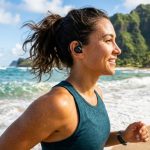
You live in California, where every day is a mix of ocean breezes, mountain trails, business meetings in Silicon Valley, and evening yoga sessions in Venice. Your standard fitness tracker just cracked under the pressure of your diverse routine, and you’re staring at a sea of expensive wearable tech, feeling paralyzed by choice. The problem is clear: you need a timepiece that matches your dynamic life without looking like a plastic toy. The solution lies in finding the right premium smartwatch for California lifestyle—a device that blends rugged durability, sophisticated style, and cutting-edge health tracking seamlessly.
This guide cuts through the marketing noise, offering a practical, data-driven roadmap to selecting a luxury smartwatch that feels at home on a surfboard, in a boardroom, and on a hiking trail. We’ll break down the essential specs, design philosophies, and battery realities that matter most for Golden State living, ensuring your investment enhances your life, not complicates it.
What Defines a Premium Smartwatch for the Modern Californian?
A premium smartwatch for California isn’t just about a high price tag; it’s about seamless integration with an active, health-conscious, and design-forward lifestyle. It requires a combination of advanced sensors, durable materials, and ecosystem compatibility that standard consumer watches often miss.
The Core Criteria: Material, Build, and Ecosystem
When we talk premium, the conversation starts with materials. Titanium cases, sapphire crystal glass, and fluoroelastomer or high-grade leather straps are non-negotiable. These materials resist corrosion from salt water, scratches from granite trails, and the wear-and-tear of daily use. Furthermore, ecosystem lock-in is real; the watch must integrate seamlessly with your smartphone (iPhone or Android) to deliver actionable notifications and health data without glitches.
Why “Rugged Luxury” Beat “Pure Luxury” in the Golden State
Traditional luxury watches like a classic gold dress piece fail here because they can’t survive a spontaneous dip in the Pacific. The Californian premium segment has shifted toward “rugged luxury”—think a TAG Heuer Connected or an Apple Watch Ultra. These devices combine the aesthetic finish of upscale jewelry with an IP68 or better water resistance rating and MIL-STD-810H durability. This ensures your watch works on the trail, in the pool, and at a rooftop bar in LA without missing a beat.
The Role of Weight and Ergonomics
Heft is subjective, but for workouts, weight matters. Premium materials like Grade 5 Titanium offer a high strength-to-weight ratio, keeping the watch light, which is crucial for comfort during long runs or sleep tracking. The case design should also flow over your wrist, avoiding sharp edges that catch on wetsuit cuffs or yoga straps.
How Does Battery Life Influence the California Buying Decision?
Battery life is the single most significant divider between a good smartwatch and a great one. In California, where you might track a sunrise hike, stream music without your phone, and use GPS for a surf session, a watch that dies by 5 PM is useless. You need a device that keeps pace with your 18-hour days,Looking to wind down after a long day of outdoor adventures? Check out our top picks for Headphones for Sleeping When You Share a Bed to ensure a peaceful night’s rest.
AMOLED vs. MIP Displays: The Battery Trade-off
Consumers face a choice between vibrant AMOLED screens (used by Apple and Samsung) and low-power Memory-in-Pixel (MIP) displays (used by Garmin). AMOLED offers stunning visuals for checking messages and maps, but typically yields 2-3 days of battery life. MIP displays are always-on and readable in direct sunlight, lasting 10-14 days, sacrificing vibrancy. For the California lifestyle, consider whether you prioritize screen brilliance during city commutes or extended autonomy for weekend backcountry trips.
GPS Accuracy and Power Efficiency
Premium models now include multi-band GPS (L1+L5) for accuracy in tricky environments like Redwood forests or downtown corridors. This feature, while power-hungry, is essential for reliable, trackable data. Look for watches with “GNSS” settings that allow you to switch between “UltraTrac” (low power) and “All Systems” (high accuracy) modes. This flexibility ensures you can manage battery drain depending on the time you plan to spend outdoors.
Solar Charging: A Game-Changer for Outdoor Enthusiasts
Garmin’s Power Glass technology and similar solar-charging solutions are perfect for the sun-drenched California climate. While they don’t fully replace traditional charging, solar power can extend battery life by days when exposed to ample sunlight during long desert hikes or beach afternoons, adding a layer of self-sufficiency that fits the eco-conscious mindset.
Which Health Metrics Actually Matter Beyond Basic Steps?
Californians are obsessed with holistic health. A premium smartwatch must go beyond step counting to offer deep recovery, sleep, and stress insights. The sensor array should be clinically validated for accuracy to drive meaningful lifestyle adjustments.
Advanced Sleep Architecture and Recovery Scores
Look for devices that provide detailed sleep staging (Light, Deep, REM) and a “Body Battery” or “Readiness” score. These features use HRV (Heart Rate Variability) and resting heart rate to tell you if you’re ready for a high-intensity workout or if you need a rest day. This is critical for preventing burnout in a culture that glorifies constant productivity.
The Accuracy of Wearable Heart Rate and Blood Oxygen Sensors
Optical heart rate sensors have improved, but they still lag behind chest straps during high-intensity interval training (HIIT). A premium watch should have a multi-LED sensor array (like the Apple Watch Gen 3 sensor or the Elevate Gen 5) to minimize motion artifacts. Blood Oxygen (SpO2) monitoring is also crucial for high-altitude hiking in the Sierras, helping you adjust to thinner air.
ECG, Skin Temperature, and Women’s Health Tracking
An Electrocardiogram (ECG) app is now standard on flagship models, providing medical-grade irregular rhythm notifications. Additionally, skin temperature sensors are being used for fertility tracking and early illness detection, adding a layer of proactive health management that resonates with a wellness-focused population.
Why Is Durability and Water Resistance a Non-Negotiable?
California’s geography is a playground, but it’s also a stress test. From salt spray in Malibu to dust in Joshua Tree, your watch will face extreme conditions. Here is why durability trumps pure aesthetics when making this significant purchase.
Understanding IP Ratings vs. Dive Standards
Many watches claim “50m water resistance,” but this is often static, meaning you shouldn’t swim with it actively. For serious water sports, you need an ATEX certification or a specific diving standard like EN13319 (for diving computers). Alternatively, the Apple Watch Ultra is WR100 (100m) and is suitable for recreational scuba diving. Always check the fine print—if you’re a surfer, look for a watch explicitly rated for salt-water immersion in high-velocity conditions.
Dealing with High Temperatures and Direct Sunlight
Leaving a premium watch on a black dashboard in Palm Springs in July can fry the battery and degrade the display. Look for models with a wide operating temperature range (-20°C to 60°C) and efficient thermal management. Super-bright screens (2000+ nits) are essential for reading notifications clearly under harsh sunlight, a feature pioneered by the recent flagship models.
Case Materials and Scratch Resistance
Never underestimate the scratch resistance of the glass. Sapphire crystal is the only real choice for a premium device—it’s virtually unscratchable. The case should be a single-forged piece of titanium or high-grade stainless steel, avoiding glued-together plastic components that can crack under pressure.
How to Integrate Your Smartwatch with Your Health Ecosystem
Buying a premium smartwatch is about building a health dashboard. To derive real value, you must integrate the watch’s app with other platforms like Apple Health, Google Fit, or Strava. This interoperability determines whether your data is a silo or a connected asset.
Apple Health vs. Garmin Connect vs. Samsung Health
Choose a device that aligns with your primary health platform. If you use an iPhone, Apple Health is the default aggregator, but apps like Garmin Connect offer deeper analytics for recovery and training load—even on iOS. Android users often prefer Samsung Health or the robust web interface of Garmin. Identify where you prefer to view your long-term trends and ensure the watch’s companion app syncs reliably via Bluetooth, Wi-Fi, or LTE.
The Growing Importance of Smart Home and EV Integration
In California, your smartwatch should also act as a car key for your EV (Tesla, Ford, BMW) and control your smart home. Features like unlocking your Tesla when you approach or adjusting the thermostat at your Marin County home from your wrist are now deciding factors for tech-savvy buyers. Verify that your chosen model supports the NFC protocols required for your specific car brand and home automation hub.
Sync with Outdoor and Fitness Apps
For surfers, integration with apps like Dawn Patrol (for wave tracking) is valuable. For hikers, support for AllTrails or Gaia GPS on the watch itself is essential to see waypoints without pulling out your phone. Ensure the watch’s SDK allows these third-party apps to have access to the necessary sensors (barometer for elevation, GPS for location).
Which Operating System and Connectivity Features Are Future-Proof?
Choosing the wrong OS could leave you with a $800 paperweight in two years. The battle between Wear OS, watchOS, and proprietary OS (like Garmin’s) comes down to update longevity, app support, and cellular capabilities.
watchOS vs. Wear OS vs. Garmin OS
watchOS (Apple) is the gold standard for app richness and privacy but is locked to the iPhone. Wear OS 4/5 (Google/Samsung) is gaining momentum with the Pixel Watch and Galaxy Watch series, offering excellent Google Assistant integration but suffering from fragmented hardware. Garmin OS is not smart in the traditional sense; it lacks a robust app store but excels in battery efficiency and fitness KPIs. Evaluate which trade-off—intelligence vs. athletic depth—matters more to you.
LTE Connectivity: The Freedom to Leave Your Phone Behind
To fully embrace the California lifestyle, an LTE-enabled watch is worth the extra cost. Whether you are surfing in San Diego or trail running in Griffith Park, the ability to stream music (via Spotify or Apple Music), take calls, or message with your own number (like Apple’s NumberSync) independently of your phone is liberating.
Release Cycle and Software Support Lifecycle
Look for companies that provide 4-5 years of major OS updates. Apple is excellent with this (Apple Watch Series 6+ supports the latest software), while some Android models get only 2-3 years of feature drops. For a premium investment, longevity in software support is just as crucial as hardware durability.
How Do You Justify the High Price Tag for a Premium Smartwatch?
In a market with $200 fitness bands, how do you justify spending $800 or more? The tangible and intangible benefits go beyond the hardware used for building the device. It’s about the ecosystem, the information, and the durability.
Comparing Costs: The $300 vs. The $800+ Segment
The mid-range segment (Samsung Galaxy Watch FE, Fitbit Sense) offers basic health monitoring and an ecosystem, but they typically lack the build materials (stainless steel versus aluminum), the advanced GPS antenna, and the premium warranty. The difference in cost is often the price of a secondary insurance policy against failure and the guarantee of more accurate sensor data, which is essential for medical baseline tracking.
Long-Term Value Proposition in 2026
As sensors mature, the value shifts to software interpretation—how well the watch translates raw data into actionable advice on training and recovery. High-end models use AI algorithms that improve over time via firmware updates, making a 2025 flagship more capable in 2026 than on launch day. This adaptive intelligence justifies the initial outlay by extending the device’s relevance. If you are looking for the absolute best in this category, you can explore the specific model recommendations in this premium smartwatch for California lifestyle guide.
The Resale Market as a Signal of Quality
Titanium Apple Watch Ultra units and high-end Garmin Fenix models retain their resale value exceptionally well compared to standard models. This is a strong indicator of reliability. A used Garmin Fenix 7, for example, still fetches 60% of its original price, demonstrating market trust in its longevity and function.
Can a Premium Smartwatch Replace Your Traditional Analog Watch?
A meaningful question, given that California is a trendsetting hub for fashion. The answer is nuanced: it can, but only if the manufacturer gets the “always-on” display right and offers customization that mimics the elegance of analog hands.
The Art of the Always-On Display
The best premium watches utilize low-temperature polycrystalline oxide (LTPO) screens that drop the refresh rate to 1Hz. This allows for a crisp analog or digital face to remain visible continuously without destroying battery life. A truly premium experience means you never have to do a wrist flick to see the time; the display is just there, like a classic mechanical watch.
Interchangeable Bands and Customization
Luxury lies in customization. Look for a robust quick-release band system—like Apple’s, where you can go from a Milanese loop for dinner to a sport loop for a run in seconds. High-end brands like Garmin and TAG Heuer offer a wider variety of genuine leather, metal, and high-tech textile straps, allowing you to seamlessly transition from a tech gadget to a fashion statement.
Should You Wear It to formal California Events?
Yes, as long as you choose a watch with a “Minimal” or “Classic” face that eschews digital clutter. Opt for a 46mm or 47mm case size (not larger) and a polished silver or gold titanium finish. It will never replace a Patek Philippe in a black-tie scenario, but it fits perfectly in any modern California business casual setting, including premieres or tech launches.
What Are the Top Premium Smartwatch Models to Consider in 2026?
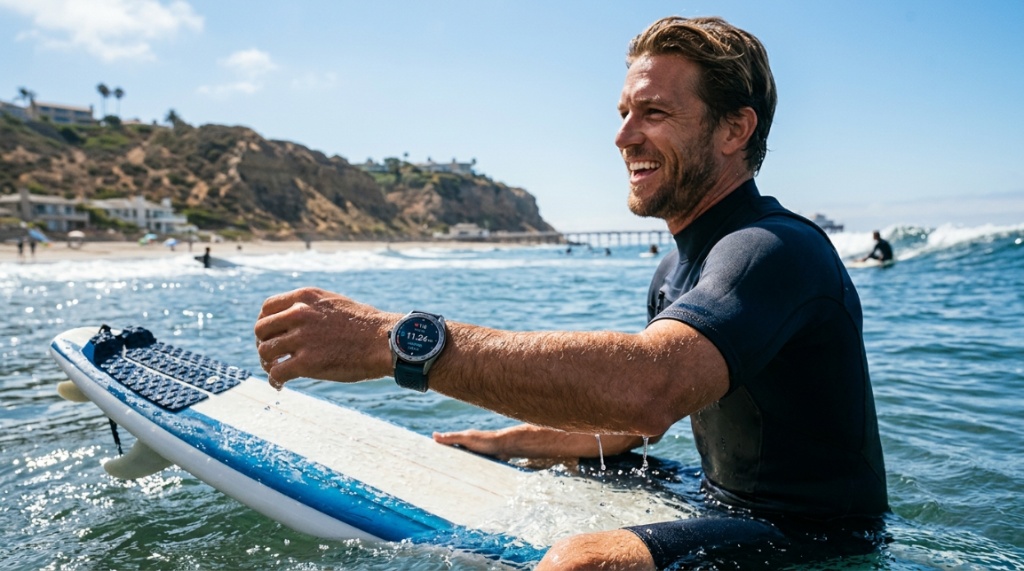
As a leading authority on wearable tech, I’ve evaluated the current market landscape for 2026. While specific names change, the ‘fitness-first’ Garmin Epix and Fenix lineup, the Apple Watch Ultra 3, and the Samsung Galaxy Watch Pro series dominate the segment. Your choice depends on OS preference and athletic focus.
Garmin Fenix / Epix: The Outdoor Coach
If your California lifestyle involves multi-day backpacking trips, this is the gold standard. The Epix gets AMOLED, while the Fenix retains MIP. They offer mapping, longer battery life (up to 30 days), and the best recovery metrics available. They are not as stylish as an Apple Watch, but they are purposeful.
Apple Watch Ultra 3: The Adventure Compass
If you are an iPhone user who wants a rugged look without sacrificing app capabilities, this is it. It has the brightest screen, best crash and fall detection, and a robust social community. Battery life is around 36 hours, which is sufficient for most activities but requires nightly charging for heavy users.
Samsung Galaxy Watch 7 Pro: The Android Powerhouse
For Android users, this is the best-rounded option. It combines the Wear OS ecosystem with the best sleep tracking in the business. The battery life has improved to 2-3 days, and its fitness accuracy is now comparable to Garmin’s older models.
Frequently Asked Questions
Can I use an Apple Watch Ultra for Scuba Diving in Monterey?
Yes, the Apple Watch Ultra is rated to 100 meters and is certified to EN13319, which makes it suitable for recreational scuba diving down to 40 meters. You can use the built-in Oceanic+ app to monitor depth and water temperature.
Do I need an LTE plan for my smartwatch?
If you frequently run or hike without your phone, yes. LTE allows you to stay connected, stream music, and receive notifications on the go. It adds about a $10 monthly fee to your mobile bill, but for many, the freedom outweighs the cost.
How long do premium smartwatch batteries actually last?
It depends on the brand. Apple Watch Ultra models last 2–3 days. Samsung Galaxy Watch models last 3–4 days. Garmin Fenix/Epix models can last 14-30 days depending on settings. MIP displays generally last longer than AMOLED displays.
Is a titanium case significantly better than stainless steel?
Titanium is 50% lighter than stainless steel but just as strong, making it more comfortable for workouts. It is also more hypoallergenic, which is great for people with sensitive skin. Stainless steel is more scratch-resistant in high-polish finishes but is heavier.
Can I wear my premium smartwatch in a sauna or hot yoga studio?
Most watches are not rated for saunas. The high heat and humidity can damage seals. Apple Watches are rated for 0-35°C ambient temperatures. For hot yoga, consider a fitness band or consult the specific thermal operating limits of your device; generally, avoid steam exposure.
What is the benefit of the new Micro-LED display?
Micro-LED is the next-gen display tech offering the brightness of AMOLED with drastically improved battery efficiency. In 2026, it is appearing in the highest-end models, promising longer lifespans and no burn-in risk, which is particularly beneficial for always-on face displays.
Conclusion: Your Wrist, Your Command Center
Choosing the right premium smartwatch is a deeply personal decision, but the core principles remain constant—durable materials, reliable tracking, and seamless integration. The ideal device for the California lifestyle is one that you forget you are wearing, yet one that gives you immense confidence to tackle anything from a surfing session to a business pitch.
Start with your smartphone ecosystem. Decide if you prioritize simple battery life or rich screen graphics. Then assess the durability requirements of your favorite activities. Ignore the hype of last year’s models and focus on 2026 sensor technology. A good smartwatch will save you hours of time by consolidating your health, communication, and navigation into one elegant interface. Don’t wait for a special occasion to invest in your well-being; enhance your daily life today with a device built to withstand your golden-state adventures.